
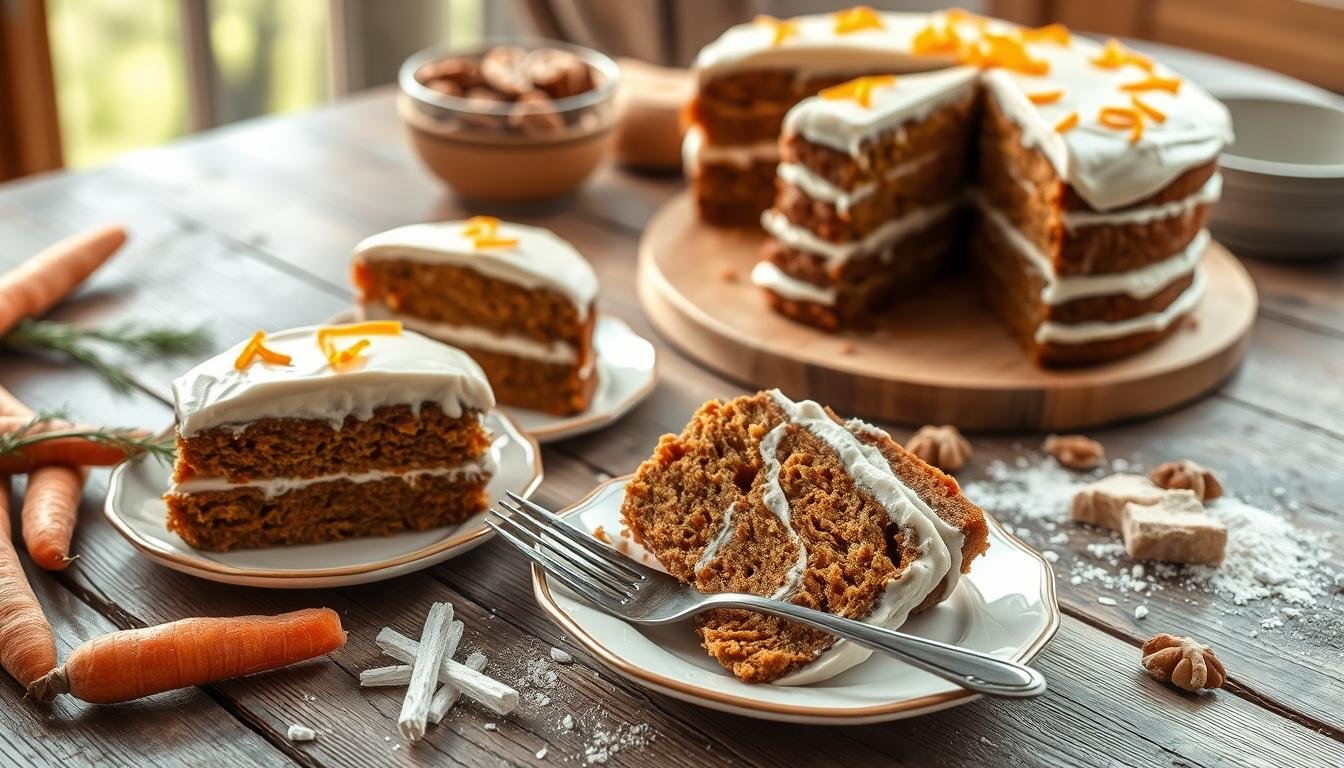
How to Make the Perfect Carrot Cake Recipe for You
Do you remember the warm, spiced aroma of a kitchen filled with love? Baking a classic carrot cake recipe brings back those cherished memories. It fills your home with comfort. You deserve a treat that balances rich flavor with a tender, melt-in-your-mouth texture.
Finding the best carrot cake recipe can feel like a daunting task, but it does not have to be. This homemade carrot cake recipe is designed to be your go-to guide for success. Whether you are a novice or a pro, this easy carrot cake recipe ensures a professional finish every single time.
You will love how this moist carrot cake recipe creates a crumb that stays soft for days. If you want a delicious carrot cake recipe that feels indulgent yet remains a healthy carrot cake recipe, you have arrived at the right place. Follow this simple carrot cake recipe to master the art of baking with total confidence.
Table of Contents
Essential Ingredients for a Moist Carrot Cake Recipe
Transform simple pantry staples into a delicious carrot cake recipe by focusing on quality. Each ingredient plays a role in creating the cake’s structure, moisture, and flavor. Knowing these ingredients is key to baking success.
Selecting the Right Carrots
Freshness is key to a truly exceptional result. Use whole carrots grated yourself, not pre-shredded bags. Pre-shredded carrots are too dry for a moist carrot cake recipe.
For the best texture and flavor, use three cups of freshly grated carrots. This amount balances sweetness and moisture for a classic carrot cake recipe. The moisture during baking keeps the crumb tender and soft.
Choosing Your Flour and Leavening Agents
The right balance of structure and lift is crucial. All-purpose flour is best for a delicious carrot cake recipe. It supports the weight of nuts and carrots well. Avoid cake flour, as it’s too delicate.
Leavening agents like baking powder and baking soda are key for a light crumb. Baking soda is especially important. It reacts with the carrots and brown sugar, helping the cake rise evenly and giving it a golden-brown color.
Balancing Spices and Sweeteners
A classic carrot cake recipe is known for its warm, aromatic spices. Cinnamon is the main spice, but nutmeg, ginger, or cloves add depth. Always use fresh spices for vibrant flavor.
Sweeteners add more than just taste. A mix of granulated sugar and brown sugar adds moisture and a hint of molasses. This mix complements the carrots’ earthiness perfectly.
| Ingredient Category | Primary Function | Key Benefit |
|---|---|---|
| Fresh Carrots | Moisture & Texture | Natural sweetness |
| Brown Sugar | Flavor & Softness | Rich molasses notes |
| Baking Soda | Leavening | Ensures proper rise |
| Warm Spices | Aroma & Depth | Signature flavor profile |
Preparing Your Ingredients for Success
A great homemade carrot cake recipe begins before you even turn on the oven. Organizing your workspace and prepping your ingredients makes baking easier. These small steps help you create a dessert that looks and tastes professional.
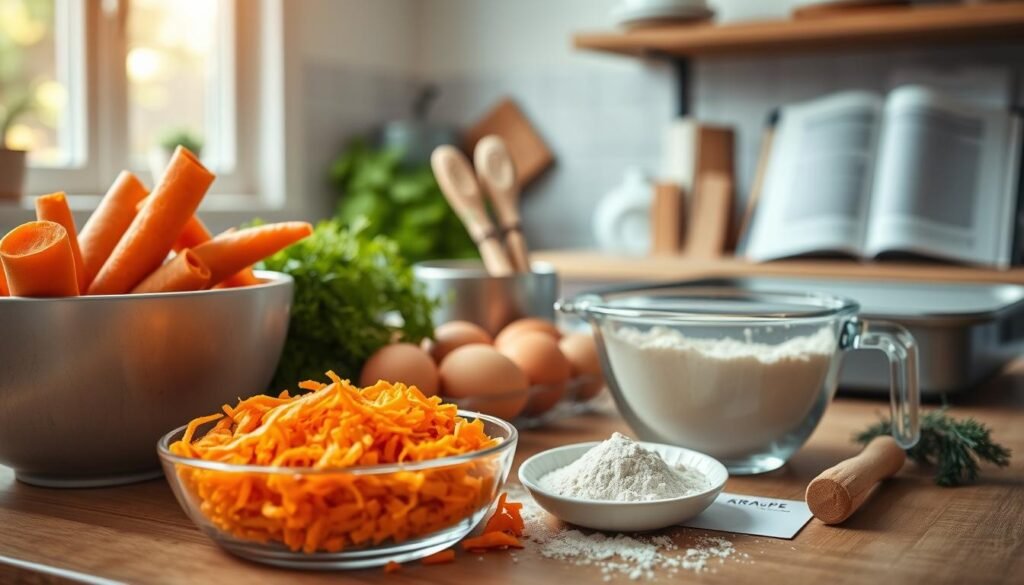
Properly Grating Carrots for Texture
The texture of your cake depends on how you grate your carrots. A standard box grater is the best tool for the right shred size. Don’t use pre-shredded carrots from the store, as they’re too dry and lack moisture.
- Use the medium-sized holes on your grater for the best results.
- Grate your carrots just before you are ready to mix the batter.
- Ensure the shreds are uniform to allow for even baking throughout the cake.
Toasting Nuts and Preparing Add-ins
If you’re adding nuts like pecans or walnuts, always toast them first. Toasting brings out their natural oils, enhancing their flavor. Once they’re cool, add them to your batter for a nice crunch.
Before mixing wet and dry ingredients, whisk your dry components well. This step prevents baking soda pockets that can ruin the taste and color of your carrots. It’s important for even baking.
Bringing Dairy and Eggs to Room Temperature
Temperature is key for a successful homemade carrot cake recipe. Eggs, butter, and cream cheese should be at room temperature. This makes your batter smooth and stable, trapping air well during mixing.
For a simple carrot cake recipe that always turns out right, don’t skip this step. Cold ingredients can make your batter break or curdle, resulting in a dense cake. Let your dairy and eggs sit at room temperature for at least thirty minutes before starting.
Step-by-Step Mixing and Baking Instructions
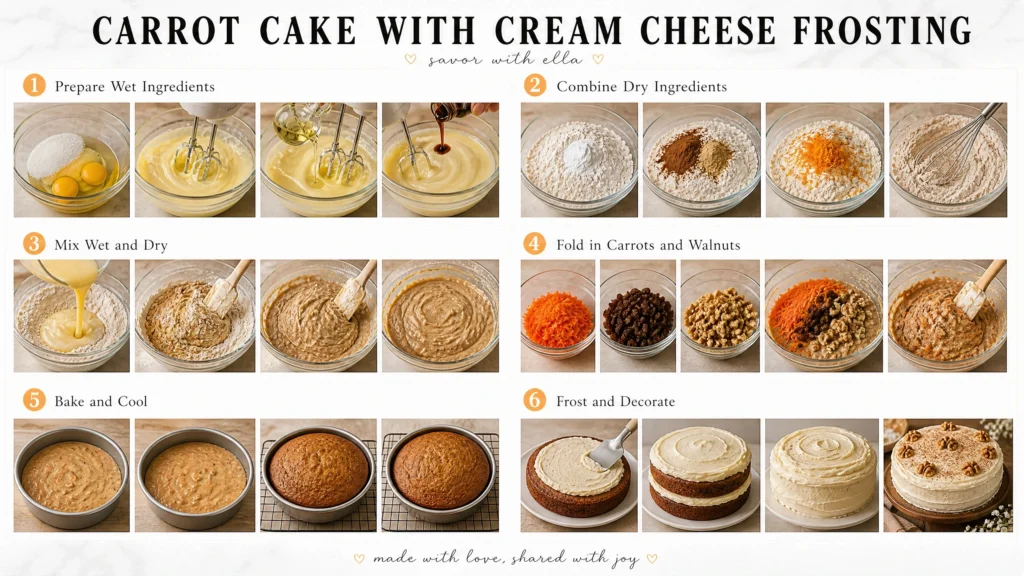
Making a smooth batter is key in baking. By following a logical sequence, you ensure every element works together perfectly. This creates the best carrot cake recipe results.
Combining Wet and Dry Components
Keeping dry and wet mixtures separate is crucial. This prevents the flour from becoming too tough too soon.
Mixing the Dry Ingredients
In a large bowl, whisk together flour, leavening agents, and spices until well combined. Consistency is key for even flavor in every bite. Sifting these ingredients can also help remove lumps.
Emulsifying the Wet Ingredients
In a separate container, whisk oil, eggs, and sugars until fully emulsified. This step is vital for a simple carrot cake recipe. It creates a stable base for a lighter texture. Make sure the oil is fully incorporated into the eggs for moisture.
Folding the Batter Without Overmixing
Once your wet and dry components are ready, gently fold the dry mixture into the wet base using a spatula. Stop mixing as soon as you no longer see streaks of flour. Overmixing can make the cake dense and rubbery.
“Baking is a science, but it is also an art that rewards patience and precision in every movement.”
After combining the base, gently fold in grated carrots and any additional nuts or fruits. Use a light hand to preserve the integrity of your add-ins and keep the batter airy.
Baking Guidelines for Even Results
Place your prepared pans into a preheated 350°F oven for even rise. Avoid opening the oven door during the first half of the baking time to prevent the center from collapsing.
Check if your cake is finished by using these simple indicators:
- The top should be golden brown and firm to the touch.
- The center must spring back when lightly pressed with your finger.
- A toothpick inserted into the middle should come out clean or with just a few moist crumbs.
Following these steps will help you achieve the best carrot cake recipe possible. Even if you are looking for a simple carrot cake recipe, these professional techniques will elevate your baking to a new level of quality.
Crafting the Perfect Cream Cheese Frosting
A moist carrot cake recipe needs a tangy frosting to balance its flavors. The frosting is the final touch that makes your dessert stand out.
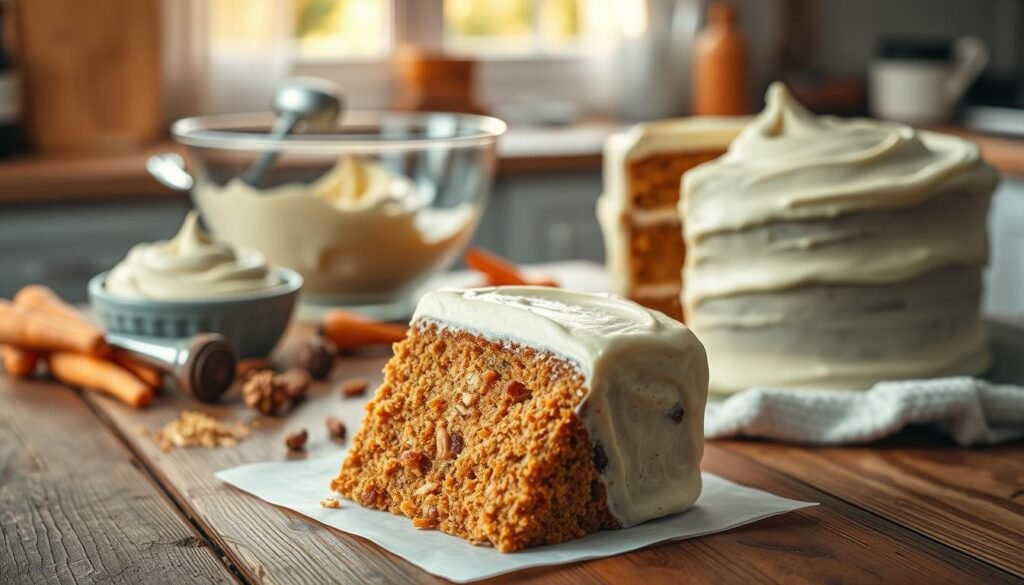
Achieving the Ideal Consistency
To get a light frosting, pay attention to your ingredients. Use high-quality cream cheese and unsalted butter, both at room temperature.
For a smooth frosting, add heavy cream with at least 35% fat content. This keeps the frosting stable and easy to spread on your moist carrot cake recipe.
Balancing Tanginess and Sweetness
A great frosting balances tang and sweetness. Sift your powdered sugar well to avoid a gritty texture.
If it’s too sweet, add a pinch of sea salt or more vanilla extract. These tweaks enhance the cream cheese’s tang, making the flavor sophisticated.
Troubleshooting Common Frosting Issues
Even pros face frosting challenges. If it’s too thin, chill it for fifteen minutes to firm up.
Lumpy frosting comes from cold ingredients or over-whipping. Use this guide to fix these problems fast.
| Issue | Primary Cause | Recommended Fix |
|---|---|---|
| Runny Texture | Warm ingredients | Chill for 20 minutes |
| Lumpy Appearance | Cold cream cheese | Beat on high speed |
| Grainy Sweetness | Un-sifted sugar | Whisk in more cream |
| Separated Frosting | Over-mixing | Fold in cold butter |
Assembly and Decoration Techniques
The last step in making a delicious carrot cake recipe is putting it together and decorating it. By following some expert tips, your dessert will look as good as it tastes. Paying attention to detail here helps avoid problems like layers sliding or frosting not being even.
Leveling and Cooling Your Cake Layers
Working with warm cakes needs patience. Cool your cake layers in their pans for 15 minutes before moving them to a wire rack to cool completely. This step helps the cake set, so it doesn’t break when you handle it.
Once the layers are cool, use a long, serrated knife to level the tops. Gently saw back and forth to remove any domed parts, making a flat surface. This makes sure your layers stack perfectly without wobbling or sliding.
Applying the Crumb Coat
A crumb coat is a thin layer of frosting that keeps loose crumbs in. It’s the key to a smooth, professional finish. Spread a small amount of frosting over the top and sides of your stacked layers with an offset spatula.
After applying this thin layer, put the cake in the fridge for about 20 minutes. This chilling makes the frosting firm and keeps stray crumbs in. When the surface feels firm, you’re ready for the final layer.
Final Frosting and Decorative Finishes
With your base set, add the rest of the frosting generously. Use your spatula to make smooth sides or decorative swirls for a rustic look. You can also add simple, elegant touches to your delicious carrot cake recipe to highlight the natural ingredients.
Here are some finishing touches to make your presentation stand out:
- Press toasted, chopped pecans into the bottom edge of the cake.
- Dust the top lightly with ground cinnamon or nutmeg.
- Pipe small rosettes around the border for a classic bakery style.
| Tool | Primary Purpose | Benefit |
|---|---|---|
| Serrated Knife | Leveling layers | Ensures stability |
| Offset Spatula | Spreading frosting | Provides control |
| Wire Rack | Cooling cakes | Prevents sogginess |
| Cake Turntable | Rotating cake | Creates smooth edges |
Customizing Your Homemade Carrot Cake
Making your homemade carrot cake recipe unique is all about personal touches. Whether for a special event or just a craving, small changes can make a big difference.
Adapting for Dietary Preferences
Modifying your recipe for specific diets is easy without losing flavor. For a healthy carrot cake recipe, try coconut sugar instead of refined sugar. Use applesauce to replace some oil.
For gluten-free options, a 1-to-1 gluten-free flour blend works great. Adding almond flour can give a nutty flavor and keep the cake moist.
| Ingredient | Standard Option | Healthy Alternative |
|---|---|---|
| Sweetener | Granulated Sugar | Coconut Sugar |
| Fat | Vegetable Oil | Unsweetened Applesauce |
| Flour | All-Purpose | Almond or Oat Flour |
Adding Texture with Fruits and Seeds
Texture makes a dessert memorable. Crushed pineapple adds delightful moisture that complements carrots. Make sure to drain the pineapple well to avoid a soggy batter.
To add crunch, mix in toasted sunflower seeds or pepitas. These add a nice contrast to the soft cake and creamy frosting, making each bite more exciting.
Storing and Serving Your Masterpiece
Proper storage keeps your dessert fresh for days. A frosted homemade carrot cake recipe can stay in the fridge for up to 1 week. Keep it covered with plastic wrap or in a cake keeper.
If you prefer a healthy carrot cake recipe, remember it may spoil faster at room temperature. Always let your slices come to room temperature for about twenty minutes before serving. This ensures the frosting is soft and the flavors are fully enjoyed.
Conclusion
Baking a classic carrot cake recipe turns simple ingredients into a fancy dessert. You now know how to mix moisture, spice, and texture with skill.
Your path to making the best carrot cake recipe starts with paying close attention to every step. Even small changes can make a big difference in how it tastes and feels.
Maybe you want to make a healthier carrot cake by using maple syrup instead of sugar. Or add more walnuts for a crunchy texture. These choices make your cake special and unforgettable for those who try it.
Share your delicious cake with friends to show off your new baking skills. Making this classic dessert shows that using quality ingredients and patience leads to the best results.