
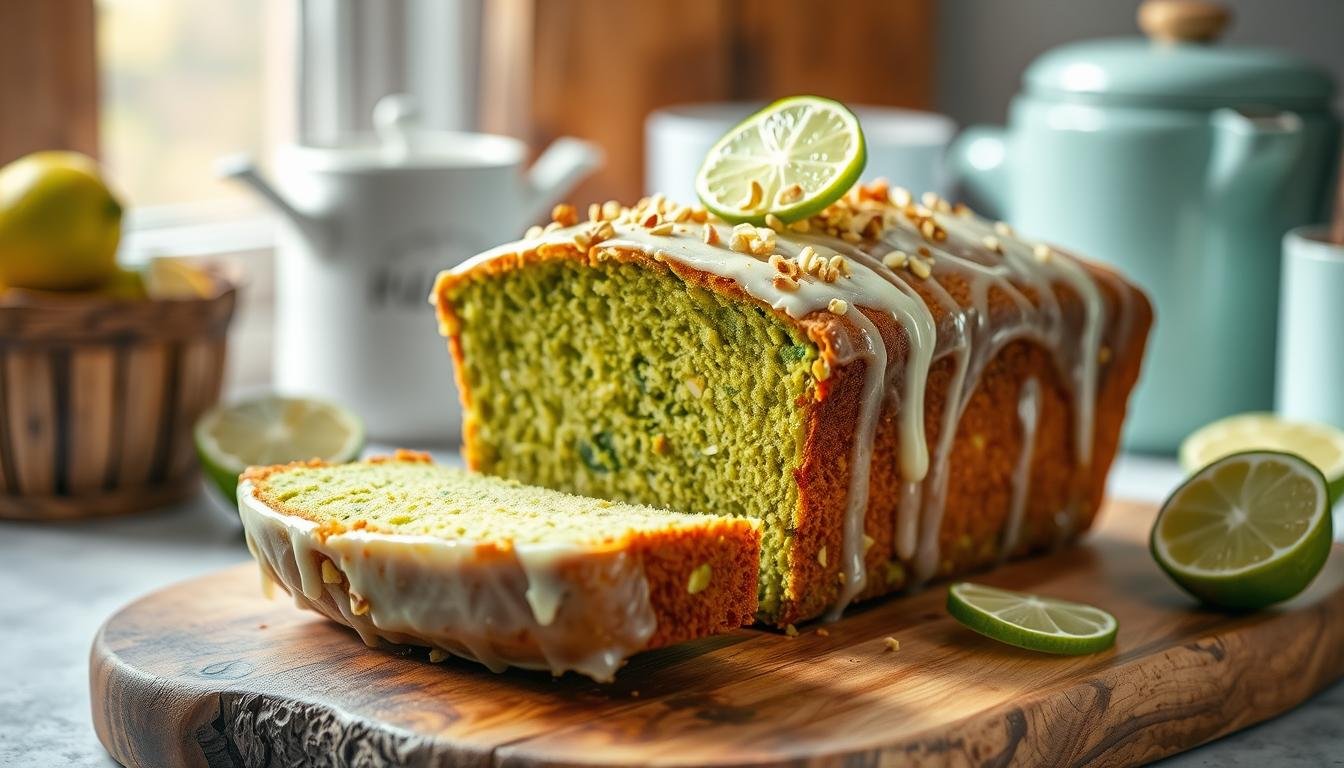
Your Guide to Baking Pistachio and Lime Loaf Cake
There’s something magical about the scent of fresh treats in your home. It feels comforting when you take a golden, perfectly baked treat out of the oven. It makes any day special, especially when shared with loved ones.
Our Pistachio and lime loaf cake is a mix of earthy and nutty flavors with a zesty finish. This mix creates a taste that’s both elegant and satisfying for everyone.
If you’re looking for a reliable recipe for your next gathering, this easy loaf cake recipe is perfect. It’s a quick way to impress guests without spending hours cooking. It’s easy for beginners and seasoned bakers alike to master.
Table of Contents
Essential Ingredients for Your Pistachio and Lime Loaf Cake
The secret to a top-notch pistachio lime cake is in the quality of your ingredients. Using the best items ensures every slice is vibrant and memorable. Taking the time to find the right ingredients is key to baking success.
Selecting High-Quality Pistachios
When baking with pistachios, freshness is crucial. Choose raw, unsalted nuts to control the salt. High-quality nuts give your dessert a rich, buttery flavor.
Stay away from pre-shelled nuts that are old. Buy whole, shelled pistachios and grind them yourself. This keeps their natural oils and bright green color.
Choosing the Right Lime Variety
The type of lime you use affects your pistachio lime cake‘s texture. Persian limes are common in the US for their consistent juice and flavor. But Key limes have a stronger, floral scent that adds depth to your cake.
Use fresh lime zest, not bottled juice, for the best flavor. The zest’s oils give your cake a bright, zesty taste.
Dry and Wet Ingredient Ratios
Getting the right mix of ingredients is crucial for your pistachio and lime loaf cake. Too much moisture makes it soggy, too little makes it dry. You need to balance fats, sugars, and leavening agents for a perfect crumb.
| Ingredient Category | Primary Function | Impact on Texture |
|---|---|---|
| Pistachio Flour | Flavor and Structure | Adds density and moisture |
| Lime Zest | Aromatic Profile | Brightens the flavor profile |
| Leavening Agents | Rise and Volume | Ensures a light, airy crumb |
| Butter/Oil | Tenderness | Prevents the cake from drying |
Preparing Your Kitchen and Equipment
A well-prepared kitchen is key to making a top-notch citrus loaf cake. Organizing your space and tools ahead of time makes the process smoother. This way, you can focus on using the best ingredients and techniques.
Necessary Baking Tools
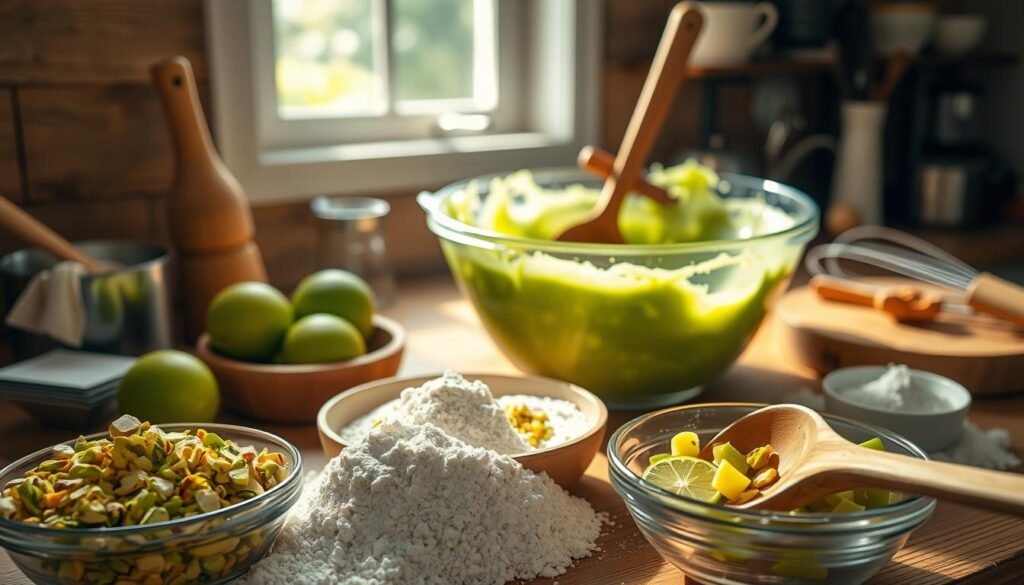
Having the right tools is crucial for a perfect lime pistachio bread. Make sure you have these items ready before you start mixing. This way, you won’t be interrupted during the baking process.
- Standard 9×5 inch loaf pan: A light-colored metal pan promotes even browning.
- Digital kitchen scale: Precision is vital for consistent ingredient ratios.
- Whisks and rubber spatulas: These tools help you incorporate air and fold ingredients gently.
- Parchment paper: Lining your pan ensures the loaf releases cleanly every time.
- Zester or microplane: This is crucial for extracting the aromatic oils from your fresh limes.
Proper Oven Calibration
Even the best recipes can fail if your oven temperature is off. Home ovens can vary by up to 25 degrees. This can cause your citrus loaf cake to have a sunken center or burnt edges.
Using an independent oven thermometer is a good idea. It helps you check if your oven is at the right temperature. If it’s not, adjust your oven dial to bake your lime pistachio bread perfectly.
Step-by-Step Mixing and Batter Preparation
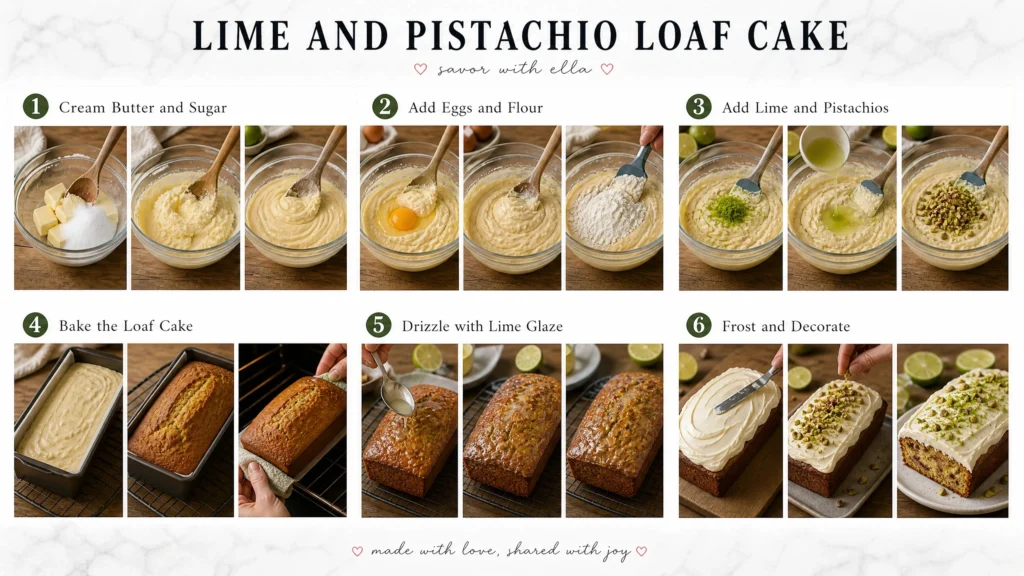
Learning to mix batter well is key to making a top-notch dessert at home. By following a specific order, your pistachio lime cake will rise perfectly and have a soft, moist texture.
Creaming Butter and Sugar
Start by mixing softened butter and sugar until it’s light and fluffy. This vital technique creates air pockets that make the cake light. Mix for three to five minutes to get it just right.
Incorporating Eggs and Lime Zest
After the butter mixture is ready, add eggs one at a time. Make sure each egg is fully mixed before adding the next. This helps the batter stay smooth. Adding lime zest at this point adds a fresh citrus smell to your easy loaf cake recipe.
Folding in Dry Ingredients and Pistachios
The last step is to gently mix in the dry ingredients and nuts. Use a spatula for this to avoid overmixing. This keeps the batter light and prevents a dense cake.
| Mixing Stage | Primary Goal | Key Technique |
|---|---|---|
| Creaming | Aeration | High-speed beating |
| Emulsifying | Structure | Slow egg addition |
| Folding | Texture | Gentle hand-mixing |
By following these steps, your pistachio lime cake will be both light and tasty. This easy loaf cake recipe needs patience during the folding to keep the nuts spread out evenly.
Baking Techniques for the Perfect Loaf
Getting the oven just right is key to a top-notch loaf. By focusing on the technical aspects, your citrus loaf cake will rise evenly and get a beautiful golden crust.
Pan Preparation and Lining
It’s crucial to prepare your loaf pan right to avoid sticking. Start with a light butter or non-stick spray coating. Then, line the bottom and sides with parchment paper, leaving some overhang for a handle.
This trick makes taking out your homemade citrus cake easy once it cools. It also keeps the edges from burning too fast during the longer baking time.
Monitoring Oven Temperature
When baking with pistachios, consistency is key. A small change in heat can mess up your loaf. Use an oven thermometer to check if your oven is at the right temperature.
Try not to open the oven door too often in the first half of baking. Each peek lets out heat and moisture, which can harm your cake’s structure.
Testing for Doneness
Knowing when to take your loaf out of the oven is crucial to avoid dryness. Here’s a guide to help you know when it’s done.
| Method | Indicator | Action |
|---|---|---|
| Toothpick Test | Clean or few crumbs | Remove from oven |
| Internal Temp | 200°F to 205°F | Check center |
| Visual Check | Golden brown top | Press lightly |
By checking these ways, you keep your citrus loaf cake moist and tasty. A well-baked homemade citrus cake should feel firm and spring back when pressed. Mastering these steps makes baking with pistachios a fun and reliable part of your kitchen routine.
Creating the Zesty Lime Glaze and Topping
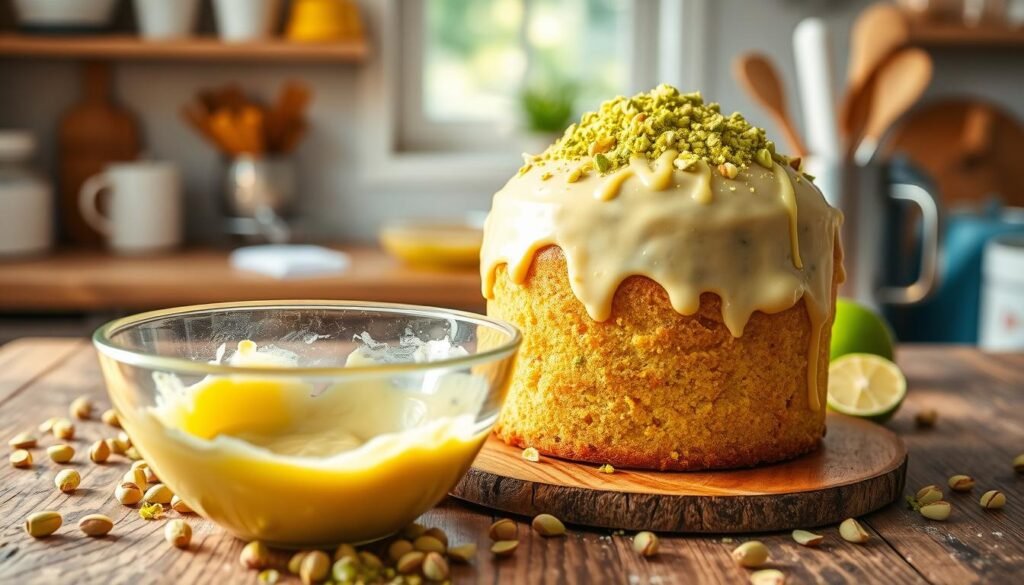
To make your zesty lime dessert stand out, balance sweetness with acidity in the glaze. This step adds moisture and a burst of citrus to your homemade citrus cake. A good finish makes your treat look as good as it tastes.
Mixing the Perfect Glaze Consistency
For the right texture, mix powdered sugar with fresh lime juice. Start with a little liquid to control the glaze’s thickness. You want it to be pourable but thick enough to stay on a spoon.
If it’s too thin, add a bit more powdered sugar. For too thick, a small amount of lime juice will help. This balance gives your lime pistachio bread a smooth, shiny finish.
Applying the Glaze for Maximum Flavor
Wait until your loaf cools before glazing to avoid it melting. Use a spatula or spoon to spread the glaze evenly. Let it flow down the sides for a rustic look that shows off the cake’s texture.
Adding Decorative Pistachio Crumbles
For a better look, sprinkle chopped nuts over the glaze. This adds a nice crunch that contrasts with the cake’s softness. Here’s a table to help you choose your toppings:
| Topping Type | Flavor Profile | Texture Added |
|---|---|---|
| Crushed Pistachios | Nutty and Earthy | Crunchy |
| Lime Zest Strips | Sharp and Bright | Chewy |
| Candied Ginger | Spicy and Sweet | Firm |
Choosing the right garnishes turns a simple homemade citrus cake into a gourmet treat. Make sure the nuts are fresh for the best taste. These details make your zesty lime dessert unforgettable for any event.
Storage and Serving Suggestions for Nutty Lime Dessert
You’ve worked hard to bake a masterpiece. Now, it’s time to add the final touches. Proper care will keep your nutty lime dessert fresh and flavorful.
Cooling and Slicing Techniques
Patience is key when cooling. Let the loaf rest in the pan for at least ten minutes. Then, move it to a wire rack to cool completely.
Don’t slice the loaf while it’s warm. It might fall apart. Use a serrated bread knife for clean slices. Saw gently to avoid tearing the inside.
“The secret to a perfect slice lies in the temperature of the crumb; never rush the cooling process if you want to maintain the integrity of your bake.”
Maintaining Freshness and Texture
To keep your zesty lime dessert fresh, store it right. Once cool, wrap it tightly in plastic wrap or use an airtight container.
Store it at room temperature for up to three days. For longer storage, follow these tips:
- Refrigeration: Keeps it fresh for two more days but may firm the butter.
- Freezing: Wrap slices in foil for a quick treat later.
- Countertop: Best for keeping the crumb soft and moist.
Pairing Recommendations
Serving your nutty lime dessert can enhance the experience. The citrus notes pair well with various accompaniments. These balance the richness of the pistachios.
Try it with whipped cream or vanilla bean ice cream. For drinks, Earl Grey tea or sparkling lemonade are great. They refresh and highlight the lime zest.
Conclusion
You now know how to make a bakery-quality treat at home. This guide shows you how to mix bright citrus with rich, earthy flavors. It’s the secret to a nutty lime dessert.
Keep practicing to get better with each loaf. Your loved ones will love the professional taste and texture of your homemade treats.
Want to try something new? The Royal Court of Pasta has a special masterclass. They share a recipe for a pistachio cake. It’s a great way to learn about premium nuts.
Don’t be afraid to try new things. Experiment with different ingredients and oven settings. This will help you make the perfect nutty lime dessert every time.
Share your baking with others. It’s a great way to spread happiness. Start your baking journey with these easy steps.